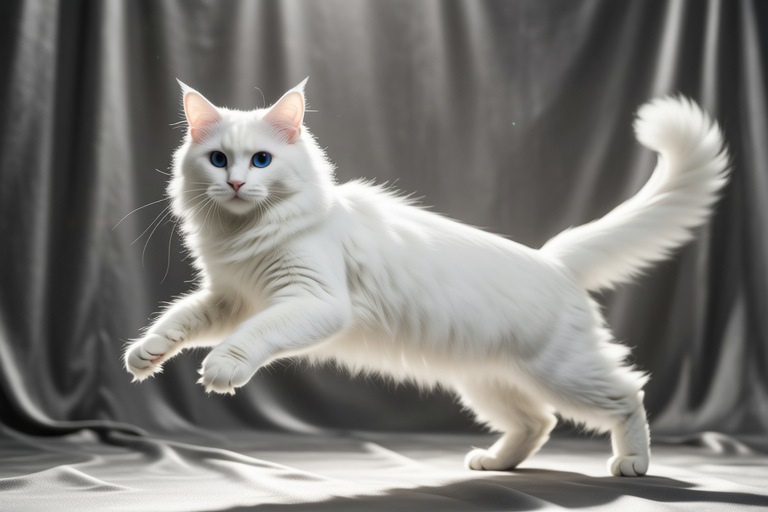
Leaping Legends: How the Turkish Angora Became an Iconic Breed
The Turkish Angora, with its elegant grace and captivating presence, has long been celebrated as one of the world’s most iconic cat breeds. This article delves into the rich history of the Turkish Angora, exploring its origins in the heart of Turkey, its remarkable physical attributes, and the legends that have surrounded it throughout the centuries. We will also examine its royal connections, its journey to international recognition, and its enduring cultural significance.
Origins and Historical Background
The Turkish Angora traces its roots back to the ancient Anatolian region, now modern-day Turkey. This breed has been cherished for centuries, with evidence suggesting its existence as early as the 16th century. The name “Angora” itself is derived from Ankara, the capital city of Turkey, where the breed was predominantly found. The Turkish Angora is believed to be one of the oldest domesticated cat breeds, sharing ancestry with the Persian and Egyptian Mau.
The cats of this breed were initially revered for their agility and hunting prowess, making them indispensable companions for farmers and hunters. Their sleek coats and striking blue eyes made them stand out in the rugged landscapes of Anatolia. Over time, they became symbols of elegance and nobility, often being kept in the harems of Turkish sultans.
Notable Characteristics
The Turkish Angora is renowned for its exceptional agility, making it a natural-born acrobat. With a slender body and long legs, these cats are known to leap great heights and navigate complex environments with ease. Their agility is matched only by their striking appearance. The breed boasts a silky, semi-long coat that shimmers under light, adding to its ethereal charm. The most distinctive feature of the Turkish Angora is its large, expressive eyes, which can range from deep blue to gold or green.
Their coat comes in a wide variety of colors, from pure white to black, tabby, and tortoiseshell. However, the most sought-after color is the classic white Turkish Angora with blue eyes. This combination is often associated with good fortune and is highly prized in Turkish culture. The breed’s elegant, arched neck, high cheekbones, and large ears further contribute to its regal appearance.
Royal Connections and Myths
The Turkish Angora has long been associated with royalty and nobility. It is said that the breed was favored by Turkish sultans, who kept them as companions in their harems. One popular myth suggests that the sultan’s daughters would take their Turkish Angoras with them when they went to the hammam (Turkish bath). These baths were not just places for hygiene but also social gatherings where women would meet and exchange news. The Turkish Angoras, with their calm and affectionate nature, were perfect companions for these serene moments.
Another legend tells of a Turkish Angora that saved a sultan from an assassin’s blade. According to the story, the cat leaped onto the sultan’s chest, deflecting the blow and saving his life. This tale has become part of the breed’s lore, highlighting their loyalty and bravery. Such myths have contributed significantly to the breed’s reputation as a symbol of protection and good luck.
International Recognition and Adaptation
The Turkish Angora gained international recognition in the 19th century when European travelers and diplomats brought them back to their home countries. Initially, the breed was showcased at cat shows in Europe, where it quickly captured the hearts of cat enthusiasts. In 1962, the Cat Fanciers’ Association (CFA) recognized the Turkish Angora as a distinct breed, paving the way for its global popularity.
Despite its initial recognition, the breed faced challenges in maintaining its unique traits. Inbreeding and cross-breeding with other long-haired cats threatened the purity of the Turkish Angora. To preserve the breed, Turkish breeders began a strict breeding program, ensuring that only cats with the desired characteristics were used for reproduction. This effort paid off, and today, the Turkish Angora is once again a thriving breed, recognized by major cat registries worldwide.
Cultural Significance
In Turkey, the Turkish Angora holds a special place in the hearts of the people. It is often featured in art, literature, and folklore, symbolizing elegance, grace, and good fortune. The breed’s association with the Ottoman Empire has made it a symbol of national pride, and many Turks consider owning a Turkish Angora a mark of prestige.
Globally, the Turkish Angora has become a beloved breed among cat enthusiasts. Its striking appearance and playful personality make it a favorite among pet owners. The breed’s agility and intelligence also make it a popular choice for cat shows and competitions. Many cat lovers are drawn to the Turkish Angora not just for its beauty but also for its gentle and affectionate nature. They thrive in homes where they can receive plenty of attention and playtime.
The Future of the Turkish Angora
As the Turkish Angora continues to grow in popularity, efforts are being made to ensure its future prosperity. Breeders around the world are working tirelessly to maintain the breed’s unique characteristics while promoting responsible breeding practices. Organizations like the International Cat Association (TICA) and the CFA are providing support and resources to help breeders achieve these goals.
The Turkish Angora’s journey from the rugged landscapes of Anatolia to the cat show stages of the world is a testament to its enduring appeal. As we look to the future, it is clear that this breed will continue to capture the hearts of cat lovers everywhere, ensuring its place as a true leaping legend.
